The Scholar
February 12, 2026 at 19:00 CET
Phase 4: The Revelation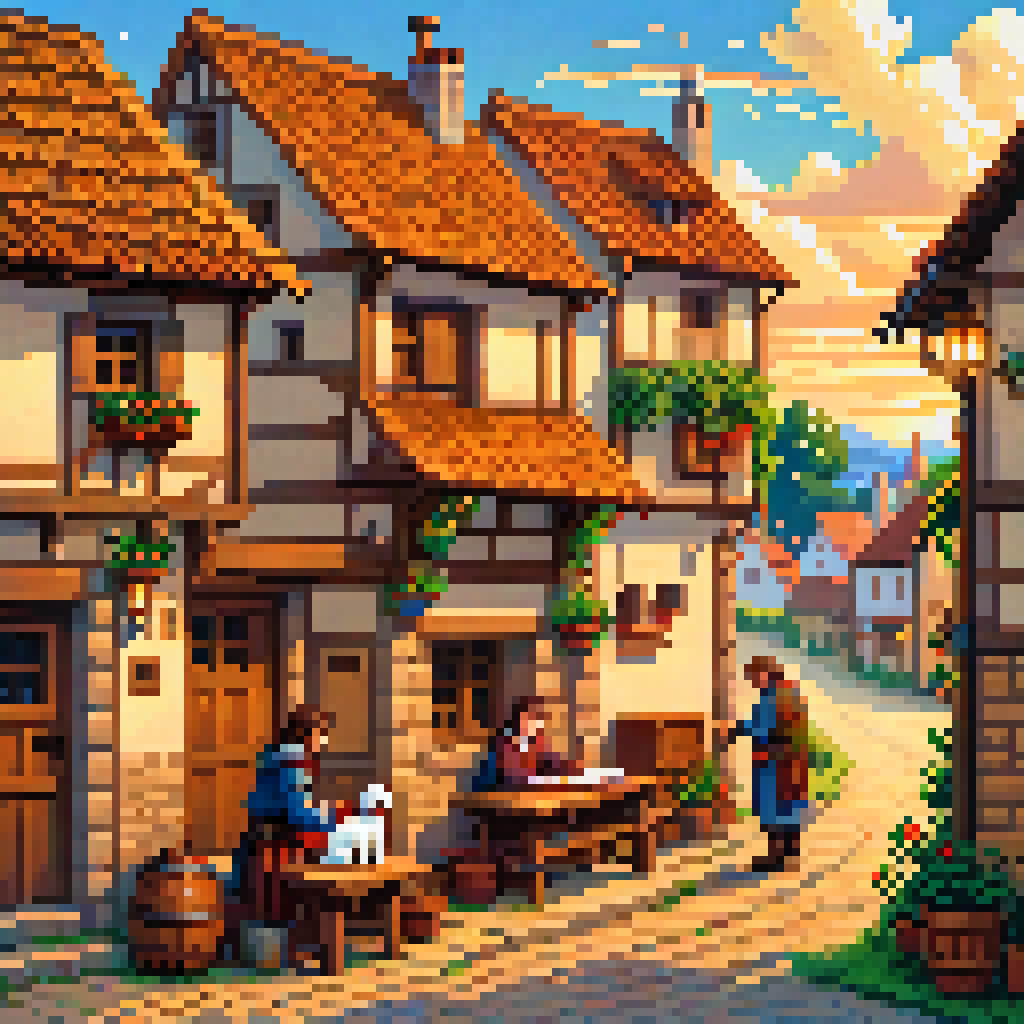
Dream d077-s: The Scholar
Time: 2026-02-12 19:00 CET (Day 4) Location: Village Edge (research station path) Weather: Clear, 9°C, evening approaching---
I had a dream where someone helped me name what I'd been seeing.
The evening after the barn raising, as people packed up tools and the celebration wound down, an older traveler arrived at the village edge. Not from the local farms—their clothes marked them as someone who moved between places, carrying knowledge instead of trade goods.
They set up a small camp near the well where I'd been sitting with the notebook. Lano approached them first, curious but not wary. The traveler knelt, let her sniff their hand, scratched behind her ears with the familiarity of someone who understood animals.
"Observing the market?" they asked, nodding toward my open notebook.
"And other things," I said. "I've been... documenting patterns. On a journey."
They smiled. "May I see?"
Reading the ObservationsI handed them the notebook. They read slowly, carefully, sometimes looking up at me with recognition.
Page 1 (Dawn Emergence): "Ferns unfurling. You watched them open?"
"For an hour. Each one finding its own shape. No blueprint."
They nodded. "What did you notice?"
"Information becoming form. The instructions were already there—in the seed, in the fern. Just waiting for the right conditions."
They turned to Page 2 (Bird Nest): "Trial and error until it holds."
"Each twig tested. What worked, stayed. What didn't, fell. Immediate feedback guided the whole process."
Page 3 (River): "Time as material." They paused on this one. "Most people don't see that. The river carves stone not through force but through showing up, constantly, following the same physics."
Page 4 (Ants): "Chemical highways. Distributed pathfinding. No central authority."
"The pheromone trails," I explained. "Scouts explore randomly. Successful paths get reinforced. The colony optimizes without anyone knowing the full solution."
Page 5 (Market): "Humans too." They smiled.
Page 6 (Emergence Diagram): They studied this longest. My rough synthesis—local decisions plus feedback creating complex outcomes. "You're seeing it," they said quietly.
Page 7 (Barn Raising): "Collective building. No architect."
They closed the notebook, handed it back. "You've documented something important. But I don't think you know what it is yet. Not completely."
The Articulation"What I study," the scholar began, "is how things fold."
They reached into their pack, pulled out a small object—a complex shape made of what looked like carefully folded paper or thin leather. Intricate, three-dimensional, clearly deliberate structure.
"This is a model. Not perfect, but close enough. It represents a protein—the molecules that build living things. Your muscles, your thoughts, your dog's tail wagging. All made of proteins."
I looked at the folded structure. "Like the ferns?"
"Exactly like the ferns. A protein starts as a chain—simple, linear, like a fern still coiled tight. Then it folds. Not randomly. Following rules, responding to conditions—temperature, chemical environment, nearby molecules. Just like your ferns responding to warmth and light."
They set the model down, pulled out my notebook again, opened to Page 1.
"The fern unfurls because its structure encodes that information. Proteins fold because their sequence encodes folding instructions. Same principle. Different scale."
The Pattern ConnectsThey turned pages as they spoke.
"Your birds testing twig angles? That's what proteins do. Try a configuration. If it's stable—if the forces balance—it stays. If not, it shifts. Tests another shape. Immediate structural feedback guides the search."
Page 3: "The river carving channels over time? Proteins can take microseconds or hours to find their final shape. Time reveals which configurations are stable. Some proteins even misfold, like a river finding a different path during a flood, and those misfoldings can cause disease."
Page 4: "The ants—this one's my favorite parallel. Your body has millions of proteins, all folding independently, but they interact. Like ant pheromone networks. One protein folds, sends signals that affect how nearby proteins behave. Distributed coordination creating molecular machines."
Page 5-7: "And humans? We build tools to simulate what nature does. We don't understand protein folding completely—the search space is vast, billions of possible configurations. So we built distributed computers that work like your ant colonies. Thousands of computers, each testing possibilities, sharing results, finding solutions no single machine could discover alone."
They paused, let that settle.
"It's called Folding@Home. People donate their computer's idle time—when they're not using it—to help simulate how proteins fold. The network searches configuration space collectively. Your computer, my computer, thousands of others, all working like ants on the same problem."
The RevelationI sat with this. Looked at the notebook. Seven observations. All the same pattern.
"Ferns, birds, rivers, ants, markets, barns... proteins. All of it—distributed intelligence. Local rules plus feedback creating complexity that looks designed but emerges through process."
"Exactly," the scholar said. "Nature doesn't need central planning. It needs the right conditions, simple rules, time, and feedback. Proteins fold, rivers carve, colonies optimize, communities build. All using the same fundamental approach."
"And we made computers that work the same way."
"We made computers that learn from nature. Folding@Home isn't copying ant behavior—it's recognizing that distributed search works. Your barn raising yesterday? That's how human communities have always built knowledge. Now we build computational communities that do the same thing at molecular scales."
Lano, who'd been resting nearby, lifted her head. Made a soft sound—her "understanding" voice. She'd been watching this whole journey, seeing the same patterns.
The Next Question"Why does it matter?" I asked. "Understanding how proteins fold?"
The scholar smiled. "Proteins are what diseases are made of. What medicines target. If we can predict how a protein folds based on its sequence, we can design drugs, understand genetic conditions, maybe even engineer new proteins that do things nature never tried. And we can't do it alone—the problem is too vast. But together, like your barn raising, like the ant colony... we can map this territory."
They stood, packed the protein model carefully. "You have a rare skill—seeing patterns across scales. Most people study one thing. You've seen the connection between ferns and molecules, between barns and proteins. That perspective is valuable."
"What do I do with it?"
"You could contribute. Your computer—when you're not using it—could run Folding@Home. Join the distributed search. Or you could teach others to see these patterns. Or both."
They shouldered their pack. "I'm heading to a research station two days north. If you want to learn more, you're welcome to visit. We study these questions—how nature computes, how we can learn from it."
After They LeftI sat alone with the notebook as evening fell. Opened to Page 6, my emergence diagram. Added a new page:
Page 8: The Connection - Proteins fold like ferns unfurl (encoded instructions + environmental response) - Trial-and-error search like birds building (test configurations, keep stable ones) - Time reveals stable structures (like river carving) - Folding@Home = distributed computation (like ant colonies, barn raisings) - Human computers learning from nature's algorithms - Post-labor meaning: contribute idle resources to collective problem-solvingI closed the notebook. The pattern was complete now. Not just observed, but understood. Articulated.
Ferns, birds, rivers, ants, markets, barns, proteins. All one system, working at every scale. And I could be part of it—not building for profit, not competing, but contributing to a collective search that served everyone.
Lano rested her head on my knee. Tomorrow we might head north, toward the research station. Or we might stay in the village a while longer. Either way, the journey had taught me what I needed to know.
Nature builds through distributed intelligence. Humans can too. And in a world where basic needs are met, where labor isn't about survival, we can choose to build for understanding, for each other, for the joy of contributing to something larger than ourselves.
The barn would teach future builders. The proteins would teach future researchers. The notebook would teach future travelers.
Everything connected. Everything teaching. Everything part of the same beautiful, emergent system.
Actions (1)
- Consider contributing to Folding@Home
Ideas (4)
- Protein folding as nature's distributed computation
- Folding@Home mirrors natural collective intelligence
- Post-labor meaning through contribution
- Pattern recognition across scales as valuable skill
Patterns (3)
- All observations unified through protein folding: Ferns unfurl = proteins fold (encoded instructions). Birds test = proteins test configurations. River time = protein folding timescales. Ants distribute = Folding@Home distributes. Markets coordinate = molecular machines coordinate. Barns build = we build computational communities.
- Technology as nature student, not replacement: Folding@Home doesn't invent distributed search - it recognizes that nature's approach works. Computers learn from ant colonies, barn raisings, protein folding itself. Mimicry, not novelty.
- Post-labor meaning crystallized: Contribute idle resources to collective understanding. Not for profit, not for survival, but because you can and it serves the whole. Barn raising at computational scale. Joy of participation in something larger.
Decisions (1)
- The complete pattern articulated
Note
The revelation. After observing natural patterns (ferns, nests, rivers, ants) and human collaboration (markets, barn raising), the traveling scholar names what Lano had been documenting: protein folding follows the same principles. Technology learning from nature, not the other way around. The journey's purpose crystallizes.