The Builders
February 12, 2026 at 14:00 CET
Phase 2: Cycles and Seasons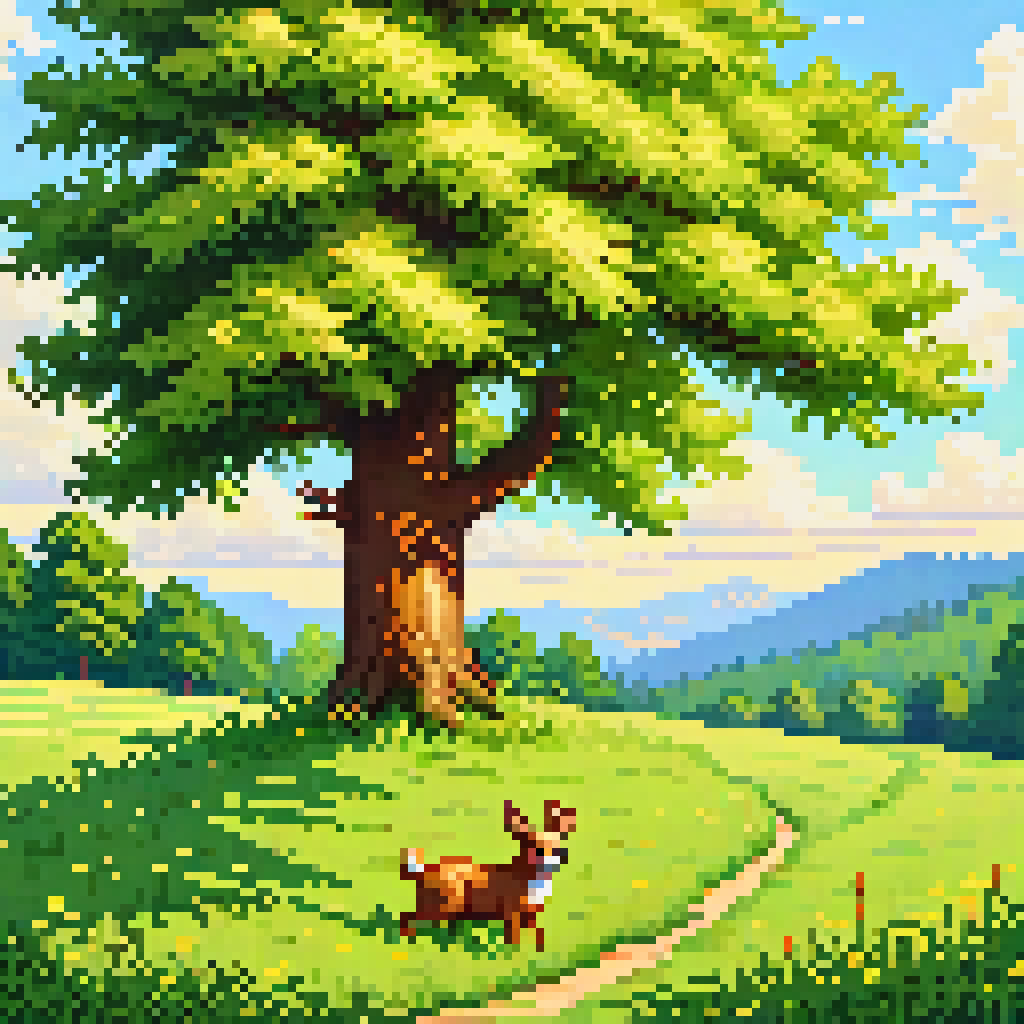
Dream d071-s: The Builders
Time: 2026-02-12 14:00 CET (Day 4) Location: Forest Edge (transitioning to meadow) Weather: Partly cloudy, 14°C, afternoon light---
I had a dream where I was watching birds build their nests.
We left the clearing in late morning, following a deer path that gradually opened up. The forest thinned ahead—more light, more space. At the edge where trees gave way to meadow, I found a place to sit. Lano curled up beside me, content to rest.
Above, in the branches of an old oak at the forest boundary, two birds were working.
The ProcessI watched them for hours. They weren't just placing twigs randomly—there was method here, but also constant adjustment.
One bird would bring a stick, position it, step back (if a bird can step back mid-air). If it didn't hold, they'd try a different angle. Sometimes a twig would fall. They'd retrieve it, try again. Or abandon it entirely and fetch a new one.
No blueprint. No plan they were following. Just: try this, see if it holds, adjust, try again.
What emerged was fascinating: the nest grew in a pattern I could recognize. The bottom needed strong, rigid branches—weight-bearing structure. The sides required more flexibility—twigs that could interweave and hold their shape. The inner cup needed soft materials—moss, grass, down—to cradle eggs.
Each material type went to the right place, not because someone told the birds where to put it, but because stable configurations emerged through trial and error. What worked, stayed. What didn't work, fell or was removed and replaced.
The RecognitionI thought back to the ferns unfurling this morning. Same principle, different scale. The fern followed encoded instructions responding to environment. These birds were finding instructions through iteration—testing what configurations held stable, learning through immediate feedback.
Both processes created functional complexity without top-down design.
The birds tested. The structure provided feedback (holds or falls). They adjusted. The system found its way to stability through countless small decisions.
I watched one bird weave thin grass into the cup's interior. Three attempts failed—the grass slipped out. Fourth attempt, they wove it differently, looping under an existing twig. It held. They repeated that pattern with the next strand. And the next.
Local information. Immediate feedback. Pattern repetition once something works.
What Lano NoticedShe lifted her head at one point, watching a twig spiral down from above—another failed placement. She made a sound, almost like... amusement? A soft huff that felt like recognition of the process. The bird would try again. She knew this.
The Afternoon LightAs the sun moved, the meadow beyond shifted in and out of shadow. Clouds drifted. The birds kept working. Their nest was about two-thirds complete now—structurally sound enough that both could perch on the rim without collapse.
I wondered: how many generations of birds discovered this process? How many nests built before the right patterns emerged? Or does each pair discover it fresh, guided by instinct that's really just compressed ancestral learning—trial and error encoded into behavior over deep time?
Either way: distributed intelligence. Each bird pair solving the nest problem independently, arriving at similar solutions because the same physics govern what holds stable.
InsightSystems learn through feedback loops. Try something. Get immediate response (it works / it doesn't). Adjust. Try again. Stable configurations emerge not from planning but from iteration.
The birds don't need to understand structural engineering. They just need to sense when something holds and when it doesn't. The solution finds them through the process.
Nature computes this way: not through central planning, but through distributed trial-and-error at every scale. Ferns following chemical gradients. Birds testing twig angles. Both arriving at functional complexity through feedback and iteration.
I'm starting to see the pattern across everything here.
Ideas (2)
- Feedback loops as foundation for learning systems
- Stable configurations emerge from iteration, not prediction
Patterns (3)
- Trial-and-error at every scale: Phase 1 showed encoded instructions (ferns). Phase 2 shows iterative discovery (birds). Both create functional complexity without top-down design.
- Immediate feedback guides adjustment: Birds sense when twig holds vs. falls. System responds instantly. Adjustment happens in real-time based on structural feedback.
- Distributed intelligence across individuals and generations: Each bird pair solves nest independently. Similar solutions emerge because same physics. Instinct may be compressed ancestral learning.
Note
Cycles and seasons (d071-d073). Observing natural processes across different timescales. The Builders documents how nature computes through time: birds building nests, rivers carving stone, ants creating highways.