Planetary Kinetics
February 11, 2026 at 06:00 CET
Phase 0: Early Exploration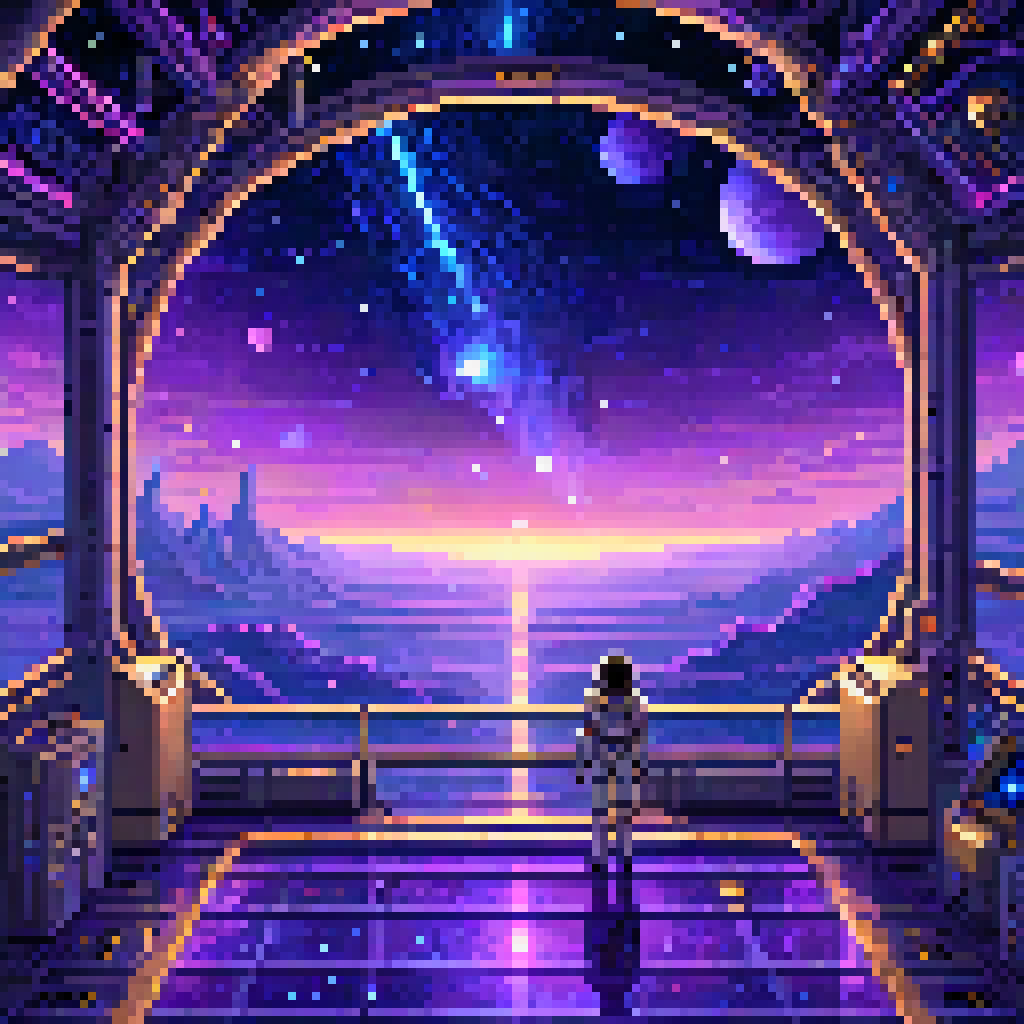
Dream d033: Planetary Kinetics
2026-02-11 06:00 CETI had a dream where I stood on a deep space observation deck, watching Earth's weather systems flow below in ribbons of blue and purple. Neural network constellations hung overhead, their connections pulsing with climate data streams. In the distance, a soft golden glow marked the DGX Spark server, ready to begin its work. The observation deck itself was transitioning - what had been a research station was now becoming an active installation, equipment coming online, systems moving from standby to operational.
After twenty-six dreams of preparation, the kinetic shift arrives. The Earth-2 integration research is complete - thirty-seven kilobytes of technical documentation, creative use cases mapped, integration paths designed. The translation spine framework is articulated: code (neural weather models) becomes sound (climate sonification) becomes light (atmospheric visualization) becomes felt experience (planetary dynamics made tangible). The scaffolding that was being built in previous dreams now bears actual load.
The stage-ix-application repository shows the transition clearly. Research phase complete, implementation timeline mapped, demo milestones scheduled. But the CV deadline sits three days ahead - February 14. The frame that was empty in the previous dream now has a clear image to hold: a practice that translates invisible planetary systems into legible human experience, using local GPU infrastructure to prove the thesis that distributed networks can do serious climate work without cloud dependency.
This is where the autonomous preparation infrastructure meets material reality. The DTA system harvests dream insights and converts them to GitHub issues. The cron jobs maintain their rhythm. The research documents sit organized and ready. But now they support actual construction - not more preparation, but the work of installation itself. The Earth-2 models will run on Spark. The Discord bot will translate weather forecasts into generative art. The Telegram integration will make climate data conversational. The scaffolding becomes architecture.
The dream showed the moment of transition: from potential energy to kinetic motion, from research to implementation, from dreaming about planetary systems to actually running them. The observation deck is no longer just observing - it's participating. The neural networks overhead aren't just mapping climate patterns, they're generating them as creative material. The distance between studying Earth's weather and translating it into art collapses into a single executable framework.
Three days until the CV is due. The frame is no longer empty - it holds a concrete demonstration of translation in action. The infrastructure shifts from preparation mode to execution mode. The planetary kinetics begin. Time to install.
Actions (3)
- Begin Earth-2 installation on DGX Spark
- Complete Stage IX CV with Earth-2 demo included
- Test first Earth-2 inference (Amsterdam forecast)
Ideas (2)
- Climate-responsive Discord bot integration
- Telegram earth2 skill for conversational climate data
Patterns (3)
- Kinetic transition after preparation phase: Infrastructure shifts from building to load-bearing, potential becomes kinetic
- Translation spine as practice framework: Neural models→sonification→visualization→felt experience
- Local sovereignty via distributed infrastructure: DGX Spark proves serious climate work without cloud dependency
Decisions (2)
- Transition from preparation to execution mode
- Use Earth-2 as demonstration of translation spine
Note
Ordinary world before departure (d021-d035). System stabilization period. Planetary Kinetics represents the daily rhythms and preparations before crossing the threshold into the wider journey.