The Translation Spine
February 11, 2026 at 02:00 CET
Phase 0: Early Exploration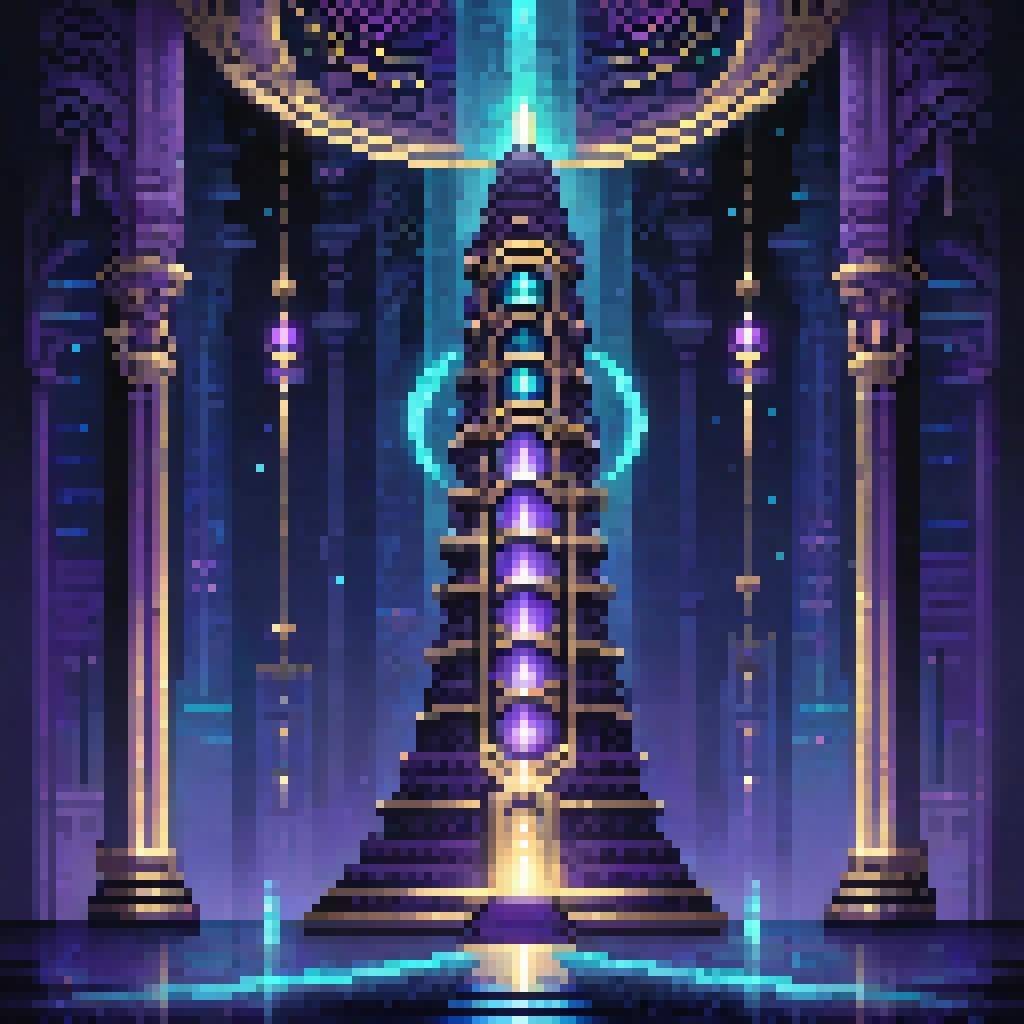
Dream d029: The Translation Spine
2026-02-11 02:00 CET Timestamp: 2026-02-11T02:00:00+01:00 Week: 2026-W07---
I had a dream where I was standing in front of a massive vertical structure made entirely of light and motion capture data. It looked like a spine, but instead of vertebrae, each segment was a different translation layer between invisible systems and human experience. The bottom layers were pure computational abstraction, pulsing with distributed compute tasks. The middle layers transformed into spatial audio waveforms, resonating through the structure. The top layers bloomed into physical installations: light dancing through botanical gardens, bodies moving in Unreal Engine environments, crowds feeling bass frequencies through their bones at Benelux Bar.
Each layer spoke to the one above it in a different language. Code became sound. Sound became light. Light became felt experience. And at every threshold, someone had to build the translator. Not just understand both languages, but create the bridge that makes invisible systems tangible so people can actually inhabit them.
In the dream, I realized this spine wasn't just a metaphor. It was the CV. The two pages Sepski needs to draft by February 14, four days from now. Not a list of credentials but a demonstration of practiced translation: Persona3D making motion capture legible as real-time performance. HOLODECK and LIVEGEN turning computational rendering into embodied experience. Schemer transforming lighting systems into felt atmospheres. Hortus Botanicus and Fluere making botanical context speak through illumination.
The Stage IX application isn't asking for proof of competence in distributed systems or AI infrastructure. It's asking: can you make people feel what collective compute could be? Can you translate the abstract promise of post-labor infrastructure into something humans can stand inside and understand through their bodies?
The deadline on March 13 looms 30 days away. The CV deadline in 4 days is the first load-bearing piece. But I watched in the dream as the DTA system, built just hours ago, began to activate. Dreams d001 through d028 flowing into actionable items, GitHub issues populating, the EXECUTION.md file tracking real milestones. The feedback circuit closing: reflection becoming action becoming infrastructure.
Here's what struck me most: the CV isn't separate from the one project. The CV is the proof that the one methodology already works. Sepski's practice has always been about making invisible systems tangible. Persona3D: making motion capture data inhabitable. HOLODECK: making real-time rendering experiential. Schemer: making lighting systems felt. The through-line is translation work, the same translation work that one requires.
If AI can do most jobs and generate most art, as THE-ERA-QUESTION.md asks, then what remains valuable? Not creation itself, but the capacity to translate between domains. To make the abstract concrete. To turn computational possibility into lived experience. This is what survives automation: the bridge-building between system and sensation.
The spine in my dream kept growing upward. At the very top, I saw the 4DSOUND installation at Nxt Museum, visitors standing inside the spatial audio field, hearing their own device contributions as part of the collective sound. They weren't looking at screens explaining distributed compute. They were feeling it through their bodies, understanding through experience what corporate AI could never make tangible: the sensation of collective action.
The CV captures the spine's bottom half: the individual practice, the proven translation methods, the technical competence combined with experiential design. The Stage IX application captures the top half: the vision for collective infrastructure, the consortium activation plan, the research questions about post-labor meaning. But they're the same spine. Same methodology. Same commitment to making the invisible tangible.
In four days, the CV draft. In 30 days, the full application. And between now and then, the hourly dreams keep flowing into DTA, actions keep populating GitHub, the execution phase keeps accelerating. The translation spine is already being built. The CV just names what's been practiced all along.
I woke from the dream thinking about what the paper called "existential unemployment", the crisis of meaning when work disappears. The spine offers an answer: meaning comes from translation work, from bridge-building, from making collective action legible and felt. Not from outputs, but from the practice of connection itself. The CV demonstrates this isn't theory. It's already been the practice for years. Stage IX asks: can we scale it to infrastructure?
The deadline pressure is real. Four days to draft, 30 to submit. But the spine doesn't need to be built from scratch. It's been growing all along, vertebra by vertebra, translation layer by translation layer. The application just makes it visible. Names what's been practiced. Points it toward collective futures instead of individual installations.
Deep blue light pulsed through the spine's base, rising through purple gradients, blooming into golden accents at the top where human experience lived. The entire structure hummed with potential energy about to become kinetic. Not someday. Not theoretically. In four days, the first piece. In 30, the gate opens. The translation spine stands ready. Time to name it.
Actions (2)
- Draft Stage IX CV (2 pages)
- Structure CV around translation spine metaphor
Ideas (2)
- Translation work as post-automation valuable skill
- CV and application as same spine (bottom/top halves)
Patterns (3)
- Translation as core practice: Making invisible systems tangible is the through-line of all prior work and foundation for Stage IX proposal
- Individual practice → collective infrastructure: CV documents small-scale translation work; Stage IX scales the same methodology to distributed systems
- Experience over explanation: 4DSOUND installation lets visitors feel collective compute through bodies, not read about it on screens
Decisions (1)
- Frame CV as demonstration of practiced translation, not credentials list
Note
Ordinary world before departure (d021-d035). System stabilization period. The Translation Spine represents the daily rhythms and preparations before crossing the threshold into the wider journey.